
Who Will Bell the Cat? Rethinking Stress, School, and Our Shared Responsibility
Who Will Bell the Cat? Rethinking Stress, School, and Our Shared Responsibility
 This morning, as sunlight danced on the leaves in my garden, I was immersed in the quiet joy of watering plants — a routine that grounds me each day.
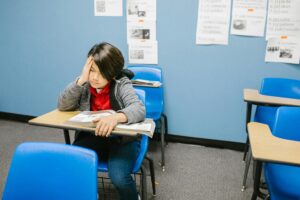
Just then my seven-year-old neighbour Vishu hurried into his car, his face clouded and heavy. Usually, he waves or shouts a cheerful “Good morning!” But today, he didn’t even look up.
His father paused to tell me, almost apologetically, “Your little friend says he’s stressed — because he has to sit in school for six hours.”
A seven-year-old. Stressed. The words landed heavy in my chest.
When School Was a Place of Joy
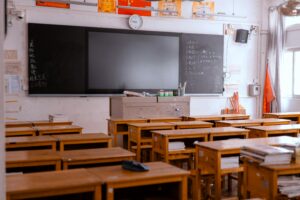 I was carried back fifty years to my own school days — to a time when school meant freedom, not fatigue. Days filled with laughter, chalk dust, the thrill of recess, and the freedom to explore and fail without fear. I was no star student. Math baffled me; chemistry was a puzzle. But school was never a place of stress. It was a place of belonging, discovery, and joy. Somewhere along the way, that magic has quietly withered.
I wasn’t the best student; math baffled me, chemistry confused me. But I loved school. I loved the noise, the friends, the chance to experiment and fail. I didn’t even know what “stress” meant.
Today, that innocence seems like an endangered species.
The Corporatization of Learning
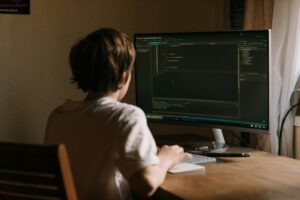 Education has quietly morphed into an industry. Schools are branded, benchmarked, and business-driven.
The goal once was to nurture human beings — kind, curious, and compassionate.
Now, it’s to produce performers — efficient, competitive, and exhausted.
Schools compete not for wisdom, but for ranking. Teachers juggle tests and technology but lose time for tenderness. Parents chase results, not relationships.
Children today are fluent in digital tools but struggle with emotional literacy. They can code, but can they care?
And children — those fragile, brilliant souls — are trapped in the middle. Their eyes, once full of wonder, now mirror anxiety. Their laughter is replaced by the ticking of the clock. They are learning how to comply, not how to think.
We’ve created smart classrooms, but not sensitive classrooms.
We’ve focused on outcomes, not outreach.
We’ve built skills, but not souls.
And so, we are raising children fluent in digital tools but illiterate in emotional connection.
What’s Happening to Our Children
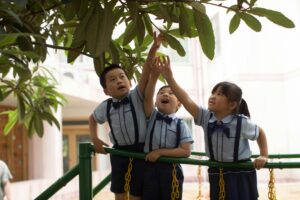 We see the signs they are everywhere — younger children reporting headaches and insomnia; adolescents struggling with anxiety, loneliness, and burnout – and call it “growing up.” But in truth, we’re asking children to grow up too soon. Schools, meant to be playgrounds of curiosity, are turning into pressure chambers. Play has become a project. Curiosity is replaced by competition. Even hobbies come with pressure to perform.

In our pursuit of excellence, we’ve stolen the essence of childhood — play, imagination, daydreaming, boredom, discovery. Even extracurriculars have become performative: every hobby must be a certificate, every effort a medal. We are teaching children to achieve, but not to enjoy.
We are raising kids who are learning to comply, not to question.
Somewhere between grades and goals, we’ve lost grace.
The cost is not just mental health — it’s the quiet erosion of spirit.
The Missing Soul of Education
 When I ask postgraduate students to write a single page about what they wish to study, most never respond.
Not because they lack ability — but because they’ve never been taught to reflect.
The system produces qualified graduates, not educated minds.
They know theories but not thought. They can present slides, but can’t hold a conversation.
A student once told me her entire master’s program was taught only through PowerPoint. No books. No dialogue. No depth.
We have replaced learning with downloading. We have created a world where knowing about something has replaced knowing from within.
Our Shared Responsibility
 The crisis is not in our children — it’s in us.
As parents, we outsource parenting to schools.
As educators, we surrender creativity to curriculums.
As students, we chase shortcuts over substance.
Change begins when each of us takes back our role.
At our level, we can:
Encourage questions, not just answers.
Celebrate effort, not only excellence.
Read together, reflect together, fail together.
Make space for silence, play, and imagination.
The purpose of education is not to fill heads — it’s to light hearts. We must reclaim the sacred purpose of education — to awaken the mind, enlarge the heart, and deepen the soul.
Who Will Bell the Cat?
 The system won’t fix itself. It’s up to us — parents, teachers, mentors, and students — to ask:
What are we doing to our children’s joy?
What kind of legacy are we leaving for them?
We must have the courage to say: This is not what childhood was meant to be.
We must dare to reimagine schooling as the art of becoming, not merely the science of achieving.
The bell that starts every school day once called us to learning.
Perhaps now, it must call us — all of us — to wake up.