
VIP Culture: When Power Forgets Its Place
VIP Culture: When Power Forgets Its Place
 The most disturbing part of VIP culture is not the queue that is broken.
It is the normalisation of disrespect.
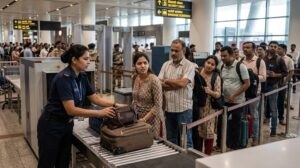
At Pune airport, a routine security queue became an unspoken lesson in hierarchy. A staff member arrived, pushed bags and a lady’s purse directly into the screening process—no request, no apology, no acknowledgement. Not even to the security personnel themselves. The response from the system was chillingly calm. When questioned, the explanation came quietly, almost apologetically:
“This is VIP culture.”
That sentence should worry us all.
When “VIP” Becomes a License to Disregard
 VIP culture is not about efficiency.
It is not about urgency.
And it certainly is not about respect.
It is about entitlement without accountability—the assumption that some lives matter more than others in shared civic spaces. Airports, hospitals, roads, government offices—these are public systems meant to serve equally. Yet VIP culture quietly converts them into stages where power performs superiority.
What makes this worse is not just the act itself, but the sheepish acceptance by those enforcing the rules. When rule-keepers begin to believe that rules are optional for some, fairness collapses from the inside.
True VIPs Don’t Demand Privilege
 Contrast this with the behaviour of Sunil Gavaskar at Bangalore airport. Faced with the same situation, he stood in the security queue like everyone else. When people ahead offered him a shortcut, he declined politely and waited his turn. No entitlement. No announcement. Just quiet dignity.
That is the paradox of power:
Those who truly command respect do not need to demand it.
If humility were a credential, many so-called VIPs would fail the screening test.
Public Servants, Private Entitlement
 The most uncomfortable question remains unanswered:
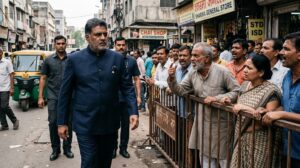
Why do politicians and government officials—public servants by definition—feel entitled to uncivil behaviour?
They are not above the system.
They are custodians of it.
VIP culture flips democracy on its head. It replaces service with status and responsibility with immunity. When those elected or appointed to serve the public begin to treat the public as an inconvenience, something fundamental breaks.
What VIP Culture Really Signals
 VIP culture tells ordinary citizens:
- Your time is less valuable
- Your presence is negotiable
- Your dignity is conditional
And over time, people internalise this message. They stop questioning. They stop expecting fairness. They accept disrespect as routine.
That silent acceptance is the real danger.
The Question We Must Ask
 The issue is not who is important.
The issue is who decides importance—and at whose cost.
If fame, power, or position requires bending basic civic norms, then perhaps the problem is not with the queue, but with our definition of success.
Because in a truly civil society,
the most powerful statement a VIP can make is to wait their turn.
And until that becomes the norm, VIP culture will remain not a symbol of importance—but a mirror reflecting how casually we allow dignity to be overridden.